- Generative AI Art
- Posts
- ElevenLabs' music platform now pays creators
ElevenLabs' music platform now pays creators
PLUS: SpAItial's Echo-2 generates 3D worlds from images, and NVIDIA's Nemotron goes open multimodal

Gen AI Art
May 01, 2026 • Estimated Reading Time: 4 minutes
In partnership with

How Jennifer Aniston’s LolaVie brand grew sales 40% with CTV ads

The DTC beauty category is crowded. To break through, Jennifer Aniston’s brand LolaVie, worked with Roku Ads Manager to easily set up, test, and optimize CTV ad creatives. The campaign helped drive a big lift in sales and customer growth, helping LolaVie break through in the crowded beauty category.
ElevenLabs just overhauled ElevenMusic from a simple listening app into a full creative platform — one that lets you generate original AI tracks, remix anyone’s songs with text prompts, and earn royalties when other users listen to your work.
The question is whether a fully-licensed monetization model can make AI music feel legitimate to creators who’ve been skeptical of the space — and whether the royalty structure will pay out at meaningful rates.
While OpenAI has built the feature with strict privacy barriers, will users be comfortable sharing their most sensitive information with an AI? The move tests the boundaries between AI as a creative tool and a trusted personal companion.
Today in AI:
ElevenLabs revamps ElevenMusic with AI creation, remixing, and creator monetization
SpAItial’s Echo-2 turns any image into a fully explorable 3D world
NVIDIA’s Nemotron 3 Nano Omni unifies vision, audio, and language in one open model
What’s new? ElevenLabs relaunched ElevenMusic as a full-stack AI music platform combining track generation from text prompts, community remixing, and a streaming layer — positioning itself as a competitor to Suno and Udio with a built-in monetization model for creators.
What matters?
Users can generate original tracks from text prompts, lyrics, and melodies; discover music from other creators; and remix any track on the platform using natural language — the full creative loop in a single app.
ElevenMusic includes a creator royalty model: artists publish tracks, build an audience, and earn based on listener engagement — mirroring the structure ElevenLabs used to pay voice creators $11M+ through its voice library.
The platform runs on fully-licensed music, built on deals with Kobalt and Merlin (August 2025) — giving it a potential legal advantage over AI music competitors that launched without licensing frameworks.
Why it matters?
By combining creation, remixing, streaming, and monetization in a single place, ElevenMusic is attempting what no AI music rival has managed: a sustainable creator economy for AI-generated audio. The royalty model will be the real proof point — if it pays meaningfully, it could shift how independent musicians think about AI collaboration.
GUIDE

What’s new? SpAItial launched Echo-2, a frontier 3D world generation model that converts a text prompt or 2D image into a fully navigable, spatially consistent 3D environment — explorable in real time from any browser, on any device, with no specialized hardware required.
What matters?
Unlike video-based 3D tools that build frame by frame, Echo-2 creates a single, persistent 3D scene using 3D Gaussian Splatting — eliminating the geometry drift and consistency issues that affect sequential generation approaches.
Users can restyle entire scenes (demonstrated with “Frozen,” “Rococo,” and “Cyber Rustic” themes) while preserving spatial consistency, and export results as meshes, point clouds, or 3DGS formats for use in game engines, robotics, and digital twin workflows.
SpAItial says high-quality 3D world exploration is no longer gated by expensive equipment — the model renders instantly in a browser even on low-end hardware.
Why it matters?
Most AI-generated 3D content today amounts to static renders or short video clips that break down on close inspection. Echo-2’s approach creates interactive, editable environments from a single image or text prompt, significantly lowering the barrier to 3D world-building for game studios, architects, and immersive content creators.
SPONSORED BY WISPR FLOW
Your prompts are leaving out 80% of what you're thinking.
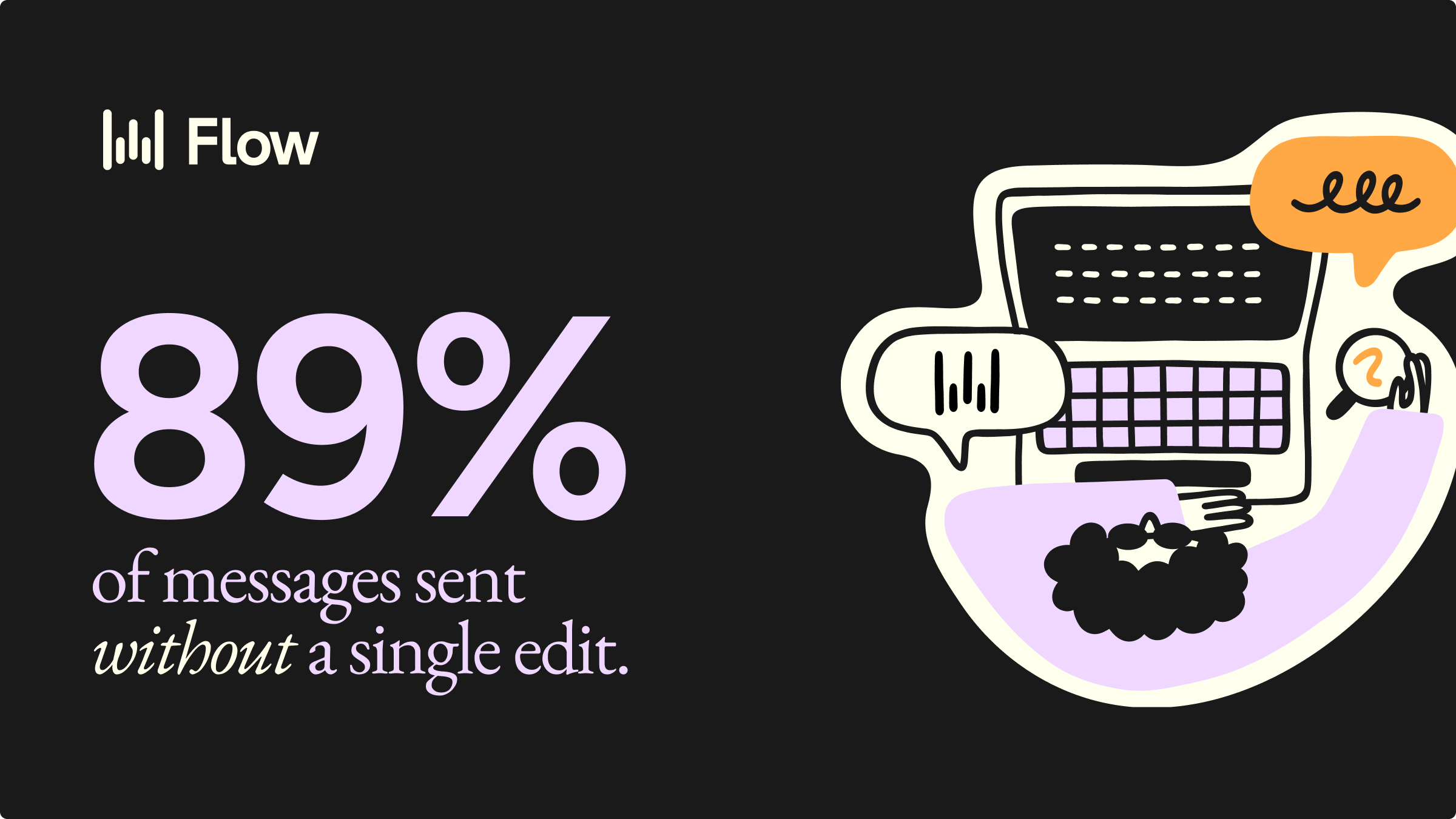
When you type a prompt, you summarize. When you speak one, you explain. Wispr Flow captures your full reasoning — constraints, edge cases, examples, tone — and turns it into clean, structured text you paste into ChatGPT, Claude, or any AI tool. The difference shows up immediately. More context in, fewer follow-ups out.
89% of messages sent with zero edits. Used by teams at OpenAI, Vercel, and Clay. Try Wispr Flow free — works on Mac, Windows, and iPhone.
What’s new? NVIDIA released Nemotron 3 Nano Omni, a new open multimodal model that processes vision, audio, and language in a single system — delivering 9x higher throughput than comparable open omni models and available immediately on Hugging Face, OpenRouter, and 25+ partner platforms.
What matters?
Built on a 30B hybrid MoE architecture, the model activates only 3 billion parameters per token and runs on just 25GB of RAM — making it one of the most efficient open multimodal models available for self-hosting.
Nemotron 3 Nano Omni tops six leaderboards for complex document intelligence, video understanding, and audio analysis — useful for creative AI practitioners building multimodal production pipelines.
Companies including Foxconn, Palantir, and H Company are already deploying the model, while Dell, Docusign, and Oracle are evaluating adoption — signaling rapid enterprise uptake of open multimodal AI.
Why it matters?
Open multimodal models that can “see and hear” simultaneously have been an enterprise need without a strong open-source answer. Nemotron 3 Nano Omni closes that gap with competitive benchmarks at a fraction of the compute cost, and broad availability across major AI platforms means creative developers can integrate it without licensing restrictions.
This massive rollout moves drone delivery from a novel experiment to a mainstream logistics operation for one of the world's largest retailers. The move accelerates the race for automated, on-demand commerce, pushing the entire last-mile delivery industry forward.
Everything else in AI
Mistral launched Medium 3.5 and Vibe remote agents — a 128B open-weight model with a 256k context window that runs on just 4 GPUs and scores 77.6% on SWE-Bench Verified, paired with cloud-based async coding agents launchable from CLI or Le Chat.
Biohub committed $500 million to the Virtual Biology Initiative, an AI-driven effort backed by Nvidia, the Allen Institute, and the Wellcome Sanger Institute to build predictive models of human cells and share all data freely with the global scientific community.
Microsoft reported that Copilot crossed 20 million paid enterprise seats — up from 15 million earlier in 2026 — with Accenture signing a 740,000-seat deal and query volume per user rising 20% quarter over quarter.
Essential AI Guides - Reading List:
Let us know!
What did you think of today's email?Before you go, please give your feedback to help us improve the content for you! |
Work with us
Reach 100k+ engaged Tech Professionals, Engineers, Managers and decision makers. Join brands like MorningBrew, HubSpot, Prezi, Nike, Ahref, Roku, 1440, Superhuman, and others in showcasing your product to our audience. Get in touch now →