- Generative AI Art
- Posts
- Claude Fable 5 brings Mythos-class AI to everyone
Claude Fable 5 brings Mythos-class AI to everyone
PLUS: Apple finally rebuilds Siri and Ideogram 4.0 and Reve 2.0 go layout-first

Gen AI Art
June 11, 2026 • Estimated Reading Time: 4 minutes
In partnership with

Turn AI into Your Income Engine

Ready to transform artificial intelligence from a buzzword into your personal revenue generator?
HubSpot’s groundbreaking guide "200+ AI-Powered Income Ideas" is your gateway to financial innovation in the digital age.
Inside you'll discover:
A curated collection of 200+ profitable opportunities spanning content creation, e-commerce, gaming, and emerging digital markets—each vetted for real-world potential
Step-by-step implementation guides designed for beginners, making AI accessible regardless of your technical background
Cutting-edge strategies aligned with current market trends, ensuring your ventures stay ahead of the curve
Download your guide today and unlock a future where artificial intelligence powers your success. Your next income stream is waiting.
Two image generation tools landed this week with the same unexpected bet: that the future of AI-generated images isn’t better prompts — it’s layout-based control. Ideogram open-sourced its 4.0 model and claimed the top spot among open-weight image tools, while Reve 2.0 debuted a generation system that builds images the way HTML builds webpages.
If both bets pay off, the next generation of AI image tools might feel less like rolling dice and more like working in Figma — and with Ideogram’s weights now publicly available, developers can start building that workflow today.
Today in AI:
Ideogram 4.0 and Reve 2.0 go layout-first
Claude Fable 5 brings Mythos-class AI to everyone
Apple rebuilds Siri as an OS intelligence layer
What’s new? Ideogram open-sourced Ideogram 4.0, its first open-weight text-to-image model — a 9.3B-parameter Diffusion Transformer that tops the Design Arena leaderboard among open-weight models with best-in-class text rendering and layout control. In the same week, Reve launched Reve 2.0 to the #2 overall position on Arena’s text-to-image rankings, with a generation system that treats images as editable structured layouts rather than prompt-only outputs.
What matters?
Ideogram 4.0 uses JSON-structured prompting: instead of describing an image in prose, you specify elements with coordinates, colors (up to 16 hex values per image), and text placements — generating at native 2K resolution with built-in transparent background support out of the box.
Reve 2.0 builds images using a hierarchical layout system — positions, sizes, attributes — similar to how HTML structures webpages, letting users edit specific regions without regenerating the whole image from scratch each time.
Both models are available through APIs today — Ideogram’s weights are downloadable from HuggingFace under a non-commercial license, with commercial deployment available via a separate paid license.
Why it matters?
The shift from text-prompt-only to layout-based generation hands creative professionals the kind of precise, iterative control previously locked inside design tools like Photoshop or Figma. Two major image models converging on the same paradigm in the same week signals this isn’t a niche feature — it’s where AI image generation is heading.
GUIDE

What’s new? Anthropic released Claude Fable 5, its first publicly available Mythos-class model — previously reserved for vetted research partners through Project Glasswing. It’s available free through June 22 on all paid Claude plans, then shifts to usage credits at $10 per million input tokens and $50 per million output tokens.
What matters?
Fable 5 sets new performance highs across the board: the first model to break 90% on core analytics benchmarks, it tops Cognition’s FrontierCode evaluation among frontier models and beats GPT-5.5 on physics research while using one-third the reasoning tokens.
Safety routing redirects queries in cybersecurity, biology, and chemistry to Claude Opus 4.8 — affecting fewer than 5% of sessions on average, though researchers report hitting capability restrictions without transparent refusals, a pattern critics call “stealth degradation.”
Real-world deployments already show its scale: Stripe used Fable 5 to migrate a 50-million-line Ruby codebase in a single day — a task that previously would have taken months of engineering time.
Why it matters?
Making the Mythos tier publicly available marks a meaningful inflection — this was the capability level Anthropic previously deemed too powerful for broad access. How Fable 5 performs at scale, and whether its safety filters hold up under pressure, will shape expectations for frontier model releases across the entire industry.
SPONSORED BY ATTIO
Attio - the AI CRM for modern businesses.
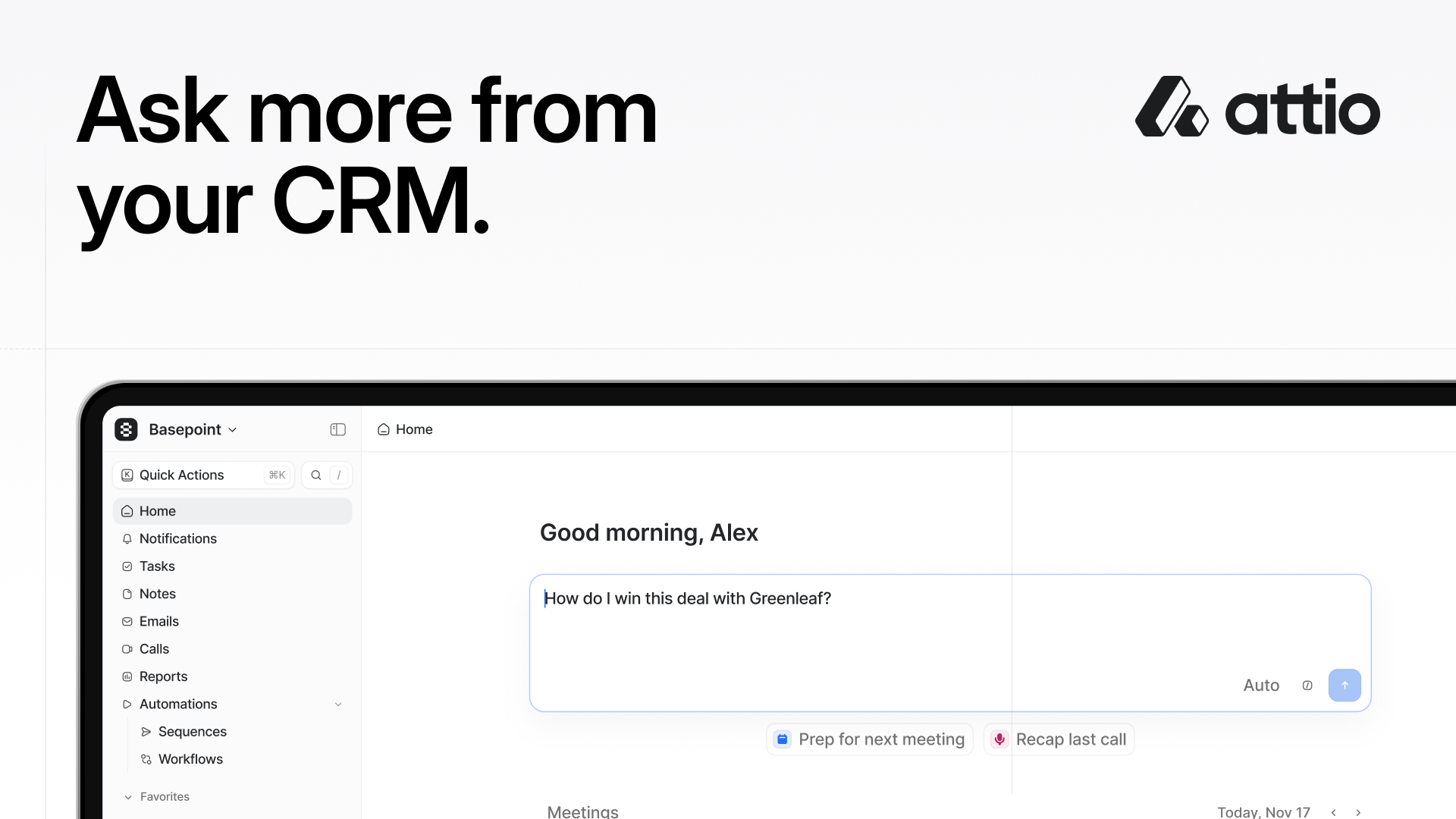
Attio is the AI CRM that keeps you ten steps ahead.
Ask Attio anything. Where should I focus? What deals are at risk? Search, update, and create across your customer data.
Ask more from CRM. Ask Attio.
What’s new? Apple unveiled “Siri AI” at WWDC26 — a ground-up rebuild that transforms the assistant from a standalone voice tool into an OS-level intelligence layer integrated across every native app on iPhone, iPad, and Mac, powered by custom Apple Foundation Models built in partnership with Google.
What matters?
The new Siri can simultaneously search messages, emails, photos, and files while understanding personal context across apps — a shift from isolated voice queries to a unified cross-app intelligence layer that can take action within your existing apps.
A “Siri mode” added to the iPhone camera lets users point at real-world objects to get contextual AI responses — from nutritional information on food to text translation from signage.
Public betas launch next month in English, with full iOS 27 and macOS Golden Gate integration planned for fall 2026 — though EU availability remains delayed due to regulatory constraints.
Why it matters?
Apple’s bet is that the next phase of AI isn’t a separate chatbot app — it’s intelligence woven directly into the operating system itself. Whether Siri AI can deliver on that vision hinges on third-party developer adoption, an area where Apple’s platform track record runs deeper than most of its competitors.
Everything else in AI
Microsoft unveiled seven in-house MAI models at Build 2026 — led by MAI-Thinking-1, a 35B-active-parameter reasoning model built from scratch without distillation from any third-party — while Mustafa Suleyman disclosed Microsoft now has formal contractual autonomy to pursue superintelligence on its own terms.
NVIDIA launched its Agent Toolkit at GTC Taipei, including Nemotron 3 Ultra — a faster, cheaper model built for long-running agents — alongside OpenShell, an open-source runtime with policy-based security guardrails for enterprise AI agent deployments.
ChatGPT introduced a memory “dreaming” mode that organizes and reinforces what the model knows about you during off-peak hours — making ChatGPT’s personalization progressively sharper over time without any user prompting.
Essential AI Guides - Reading List:
Let us know!
What did you think of today's email?Before you go, please give your feedback to help us improve the content for you! |
Work with us
Reach 100k+ engaged Tech Professionals, Engineers, Managers and decision makers. Join brands like MorningBrew, HubSpot, Prezi, Nike, Ahref, Roku, 1440, Superhuman, and others in showcasing your product to our audience. Get in touch now →